
The van while it travels
Identify drivers, service territory, parking arrangements and any pet transport. Ask how a personal vehicle used for work would be treated. A commercial-use description should match actual operations.
An injured animal, a customer’s fall and a damaged grooming van create different insurance questions. Map the work before comparing business quotes.
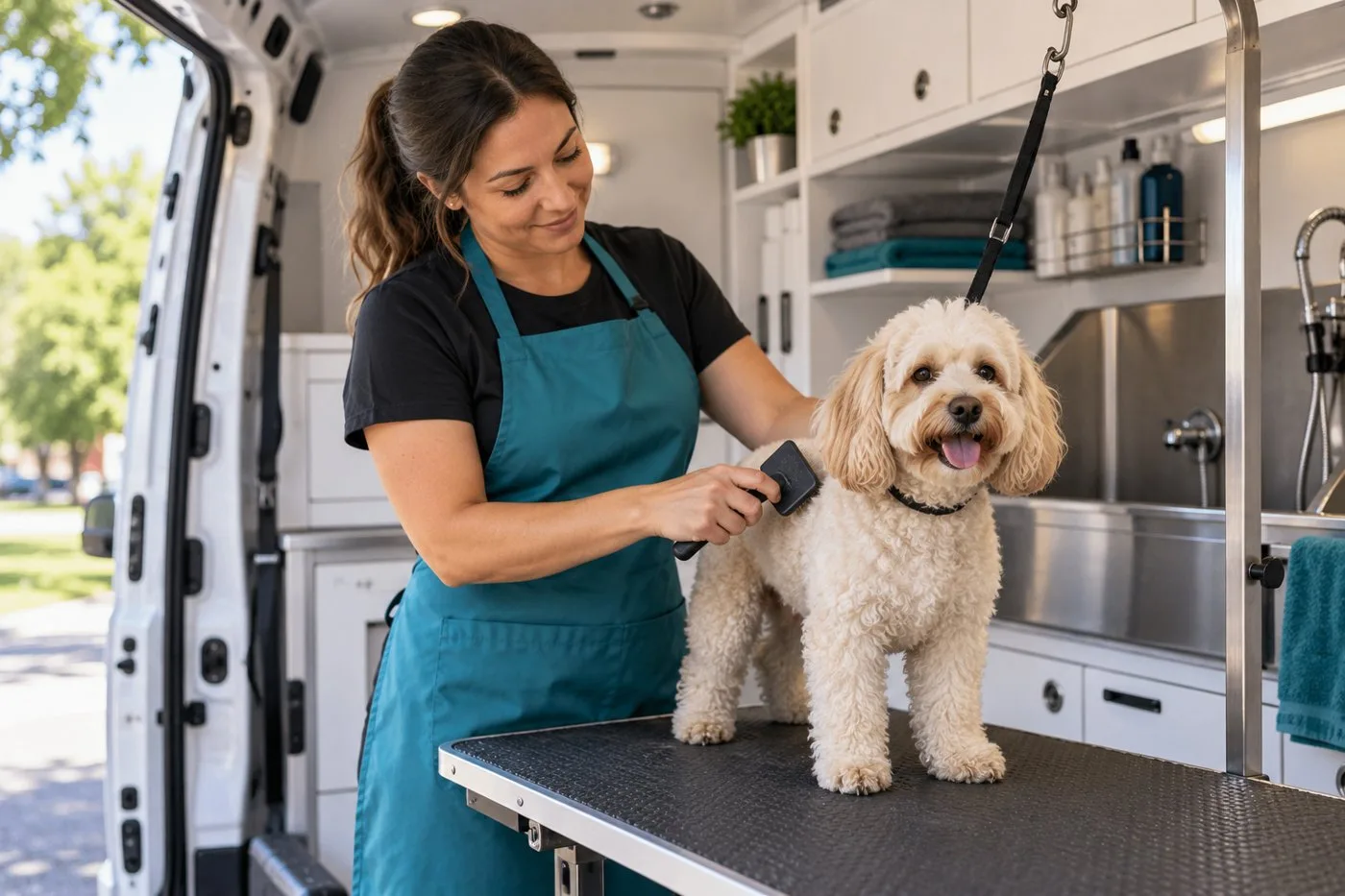
Write down who brings the pet in, where it waits, who handles it and whether you transport it. Include bathing, drying, clipping, nail trimming and any services performed away from the main premises. If you also board animals, sell products or allow independent groomers to rent stations, disclose those activities rather than assuming a grooming policy includes them.
This description gives the agent a factual starting point. The label “pet business insurance” is too broad to establish that an animal escape, an alleged grooming injury and a road accident all fall within the same contract. Ask the insurer to connect each activity with its coverage form, exclusions and limits.
| Exposure | Coverage to discuss | Question worth putting in writing |
|---|---|---|
| A customer is injured in the salon | Commercial general liability | Which premises and operations are listed, and how are defense costs handled? |
| A dog is accidentally hurt or lost while you are responsible for it | Animal bailee or other care, custody or control coverage | Does the wording cover injury, death, escape and recovery costs; is legal liability required? |
| A customer alleges your grooming service caused harm | Professional liability for grooming services | Are all the actual services included, and is this coverage separate from general liability? |
| A dryer, bath or building is damaged | Commercial property and possibly business income | Which causes of loss, equipment values, off-premises tools and interruption conditions apply? |
| A grooming van is involved in a collision | Commercial auto and mobile equipment coverage | Are the vehicle, fitted equipment and business use each insured? |
| An employee is hurt handling a pet | Workers’ compensation and employer obligations | What does the state require for this business and workforce? |
These are coverage categories to investigate, not assurances that a particular loss will be paid. The Hartford’s grooming-business materials distinguish animal bailee protection from professional liability, illustrating why those two questions should remain separate. General business-insurance guidance from the Small Business Administration likewise separates liability and property needs.
Identify drivers, service territory, parking arrangements and any pet transport. Ask how a personal vehicle used for work would be treated. A commercial-use description should match actual operations.
List fitted baths, water systems, generators, dryers and loose tools. Ask which policy responds to damage to each item and whether the coverage basis reflects what replacement would cost.
Explain whether customers or pets enter the van and whether you work inside customers’ homes. Confirm the locations and activities covered by liability and animal-care terms.
Find out what must happen before business-income coverage responds. A breakdown, accident and insured property loss may be treated differently; a day without appointments is not automatically an insured loss.
For a home salon, apply the same principle to the premises. Tell the homeowners insurer about the business and have the commercial agent explain the boundary between personal and business property or liability. A business owner’s policy can combine useful protections, but the package name does not answer the animal-care questions.
Imagine a dog escapes while being handed back after a groom. The owner asks for search expenses and later presents a veterinary bill. A useful quote review asks which section, if any, addresses the escape, recovery expense and injury; whether one event or per-animal limits apply; and whether a deductible applies separately. Do not assign those costs to a policy simply because its brochure shows a dog.
Then change the allegation: the customer says an injury came from the grooming technique itself. Ask whether the animal-care section, professional liability section or both could respond and how overlapping coverage is handled. This changes the cause of the claim, not merely its dollar amount, and can expose a gap hidden by identical headline limits.
Keep a written record of the agent’s explanation and request the actual endorsement when a coverage is added. A certificate of insurance is useful proof of a policy, but it is not a substitute for reading the terms that define an insured loss.
Your own pet-health policy and the groomer’s liability protection answer different questions. You may submit an otherwise eligible veterinary claim to your insurer, while any claim against the groomer depends on the facts and business policy. Neither arrangement should be assumed to guarantee payment or remove the other party’s responsibilities.
If an incident occurs, obtain veterinary care as needed, keep invoices and document what happened. Ask the relevant insurer how to report the event. This page does not quote business insurance or route a groomer to a pet-health product as if it covered the salon.
Public business-insurance guidance supports the categories discussed here. Current insurer materials inform the grooming examples; the actual business policy determines protection.